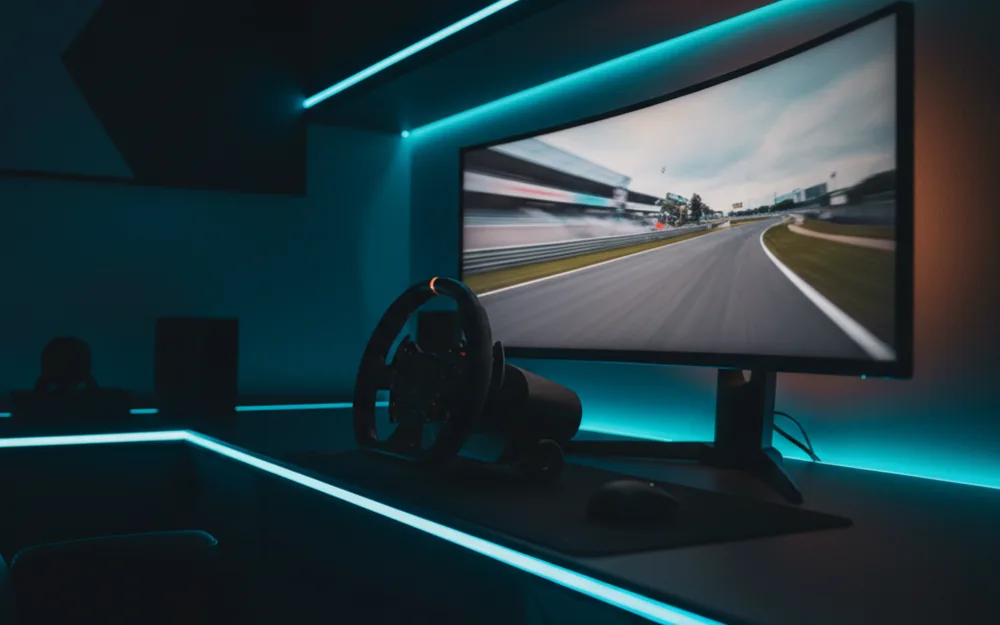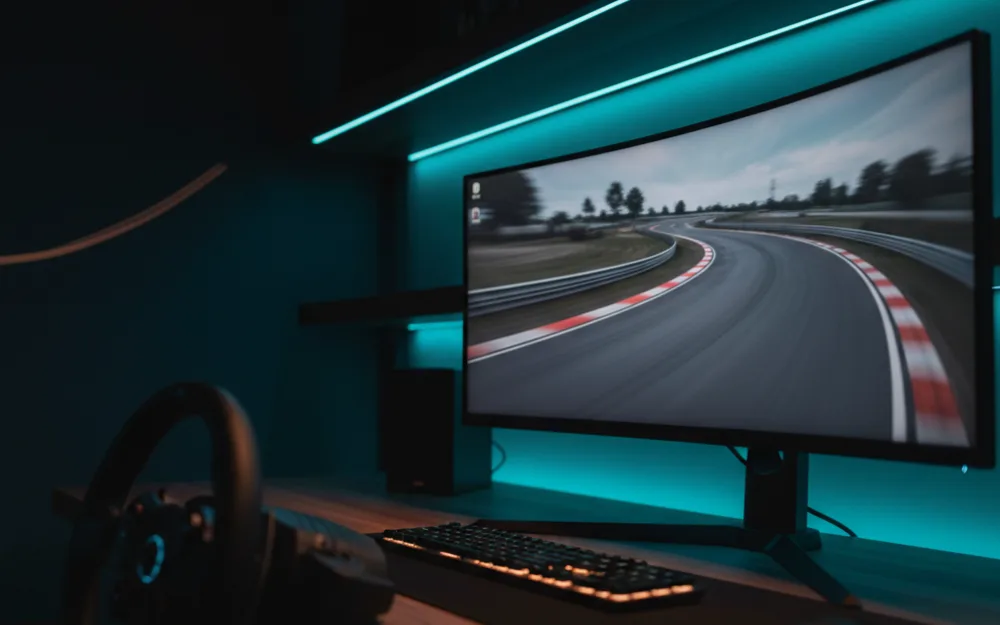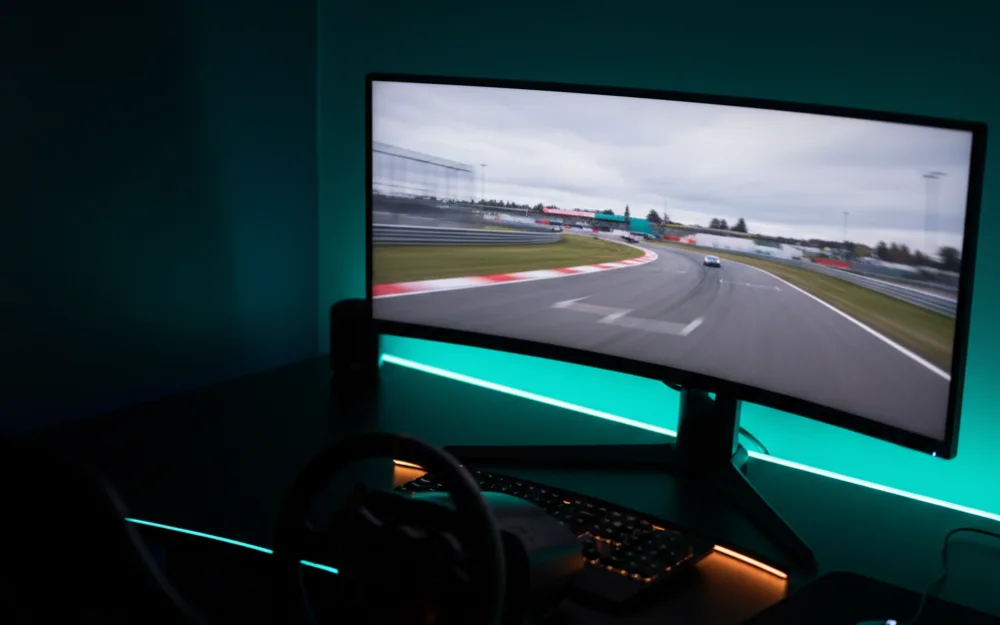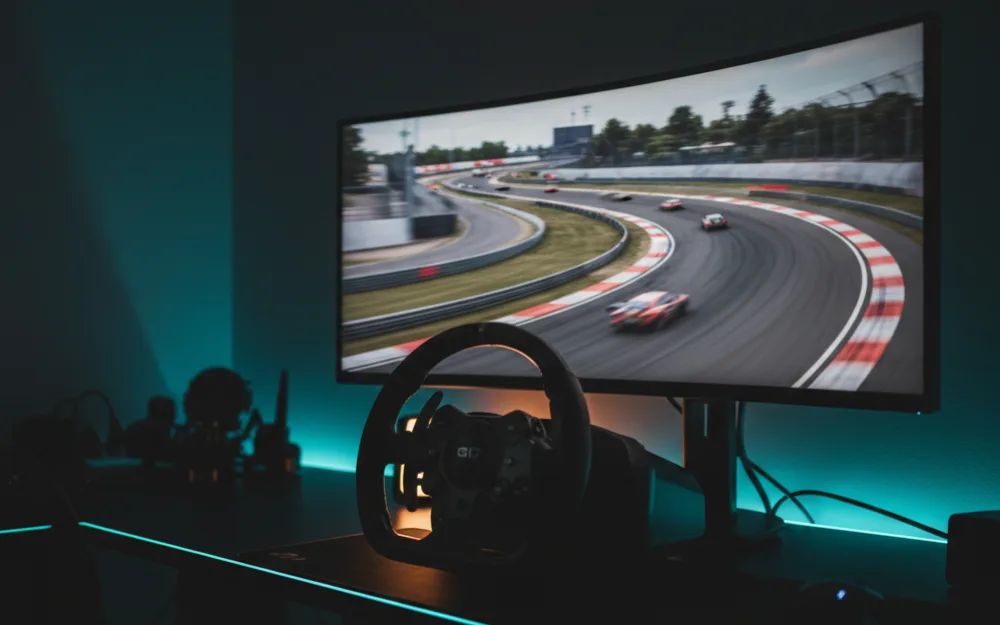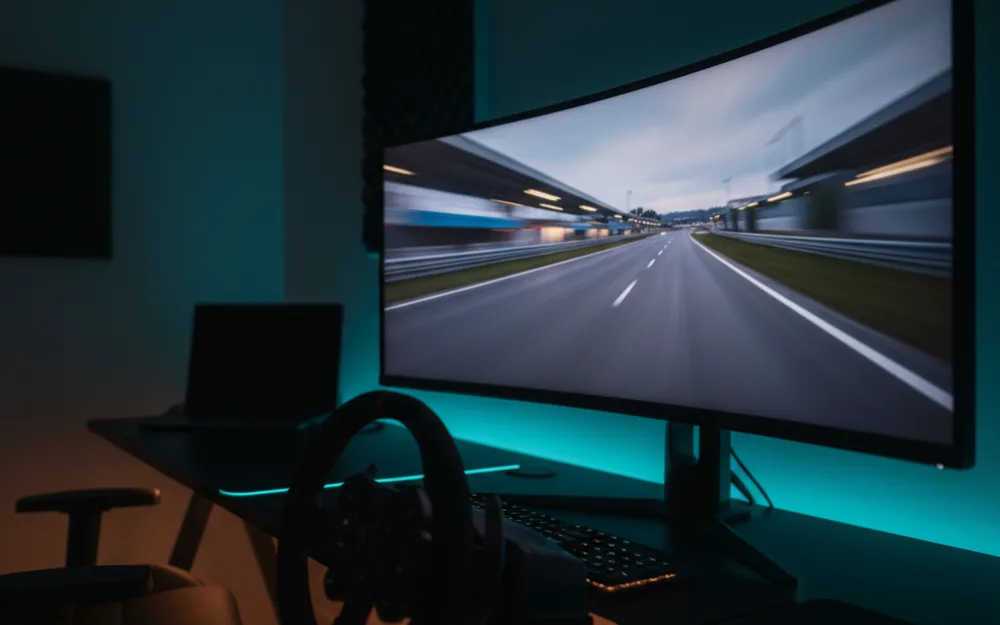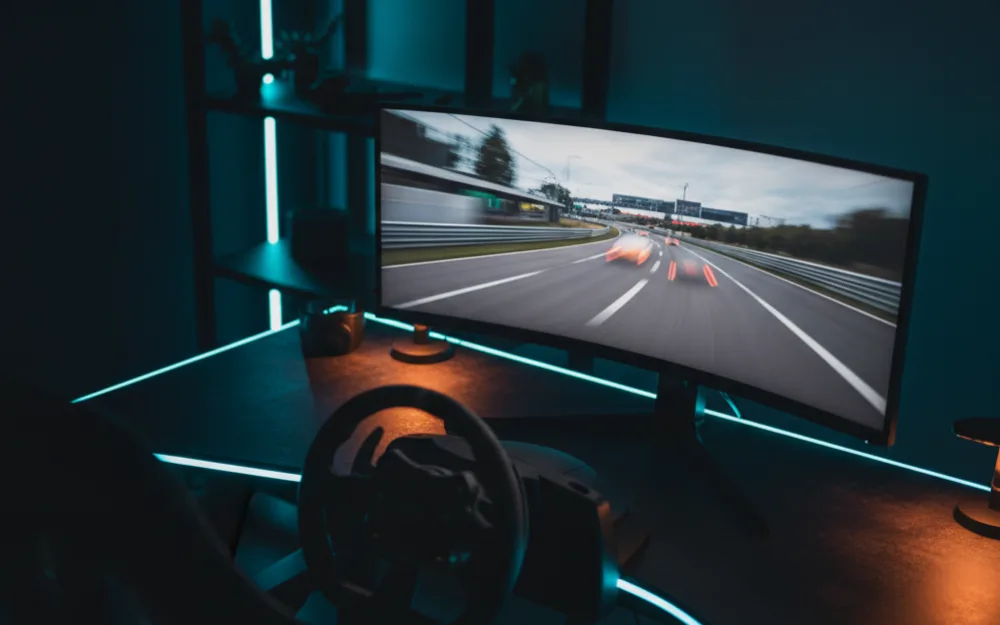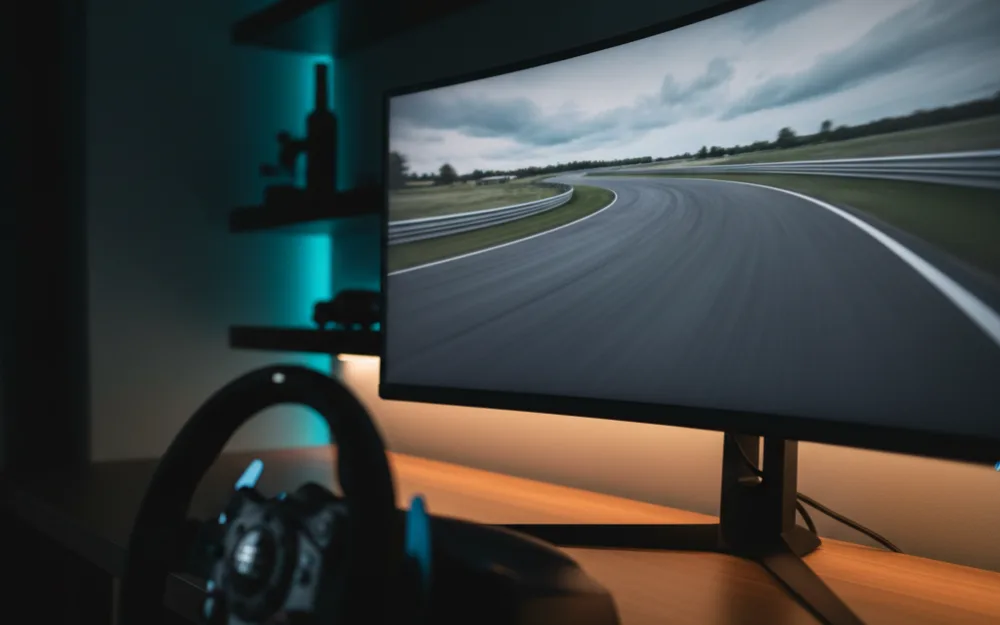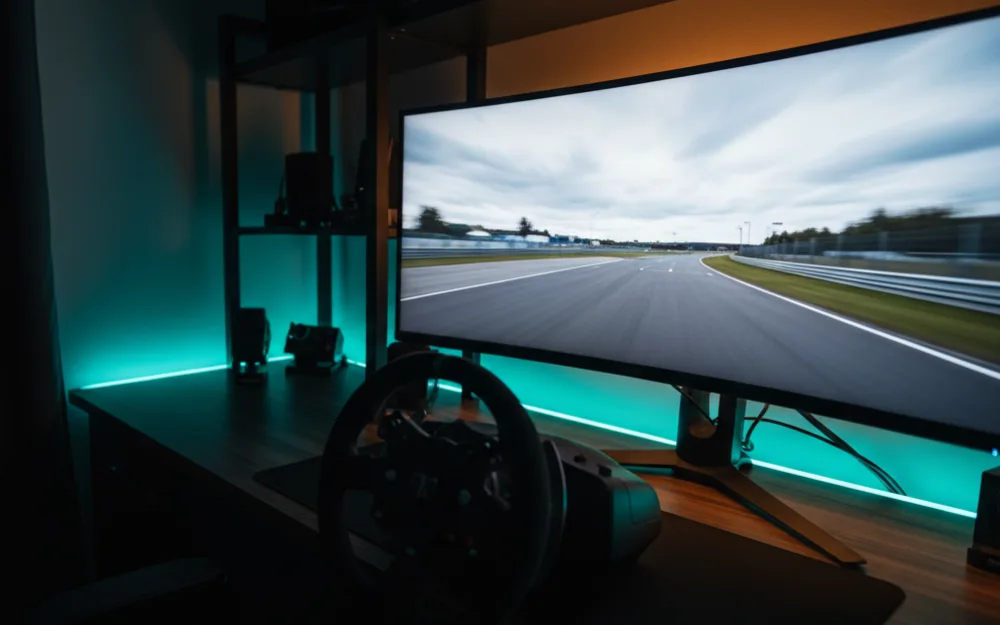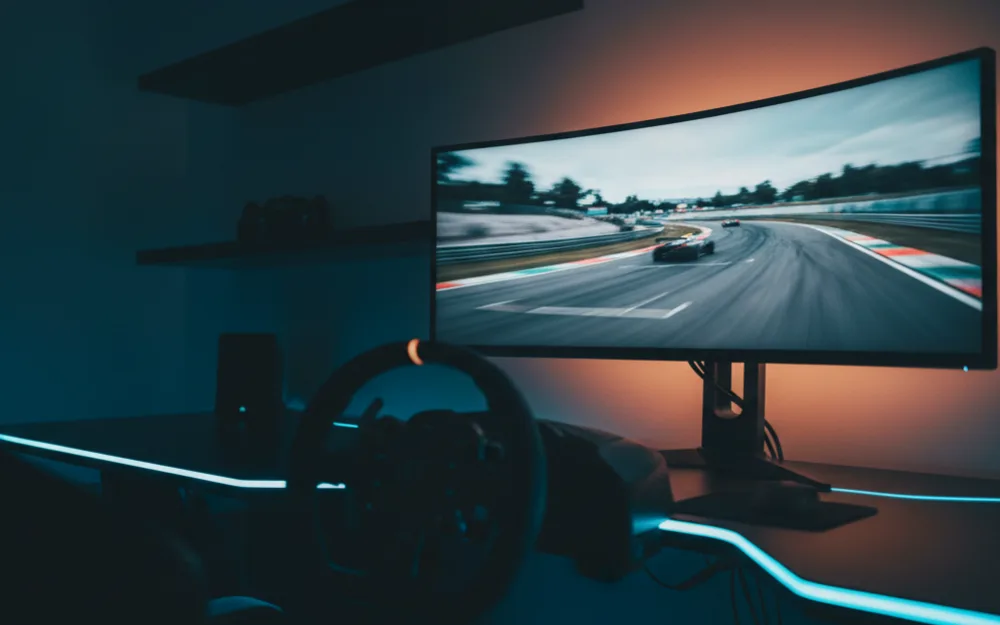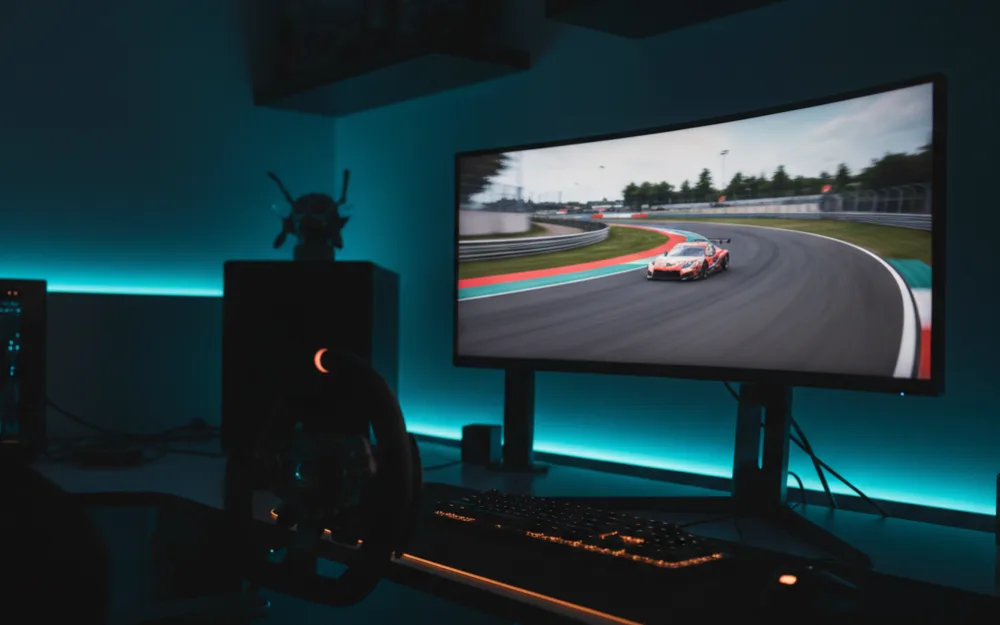


The Samsung Odyssey OLED G8, model G85SD, is a 34 inch, 21:9 curved QD-OLED monitor with a 175Hz refresh rate and a 0.03ms response time. It aims at the racer who wants the saturated color of a quantum dot OLED panel on a single immersive screen, wrapped in a slim smart monitor body with built in apps and a remote. Whether it fits you turns on one trade: QD-OLED delivers vivid color and deep blacks, but its 175Hz ceiling sits a step below the 240Hz OLED panels now common in this size, so a racer chasing the highest refresh has to weigh that gap.
This review looks at how the Odyssey OLED G8 behaves for racing, where its QD-OLED panel earns its keep, and where a higher refresh screen would serve you better. We compared Samsung specifications with measurements reported by review outlets and recurring owner feedback, and you can read how we review. If terms like refresh rate, QD-OLED, and adaptive sync are new to you, start with Getting Started.

At a glance
| Spec | Samsung Odyssey OLED G8 (G85SD) |
|---|---|
| Size and ratio | 34 inches, 21:9 ultrawide, curved |
| Resolution | Ultra WQHD 3440 x 1440, 110 ppi |
| Panel | QD-OLED, glare free finish |
| Contrast and HDR | 1,000,000:1, HDR10+ |
| Refresh rate | 175 Hz |
| Response time | 0.03 ms GtG (per Samsung) |
| Adaptive sync | FreeSync Premium Pro, G-Sync compatible |
| Extras | Smart apps, remote, Wi-Fi, 3 year warranty |
What QD-OLED brings, and what it costs
Before judging the racing picture, it helps to know why this panel looks the way it does. QD-OLED is a self lit OLED design that uses a quantum dot layer to produce color, and the practical result owners describe is unusually saturated, even color across the screen with the deep blacks any OLED gives. That is where the 1,000,000:1 contrast figure and the glare free finish pay off, because dark cockpits and night stages hold real shadow depth rather than the gray wash of a backlit LCD. Two costs come with that. The first is sustained brightness, which is moderate on OLED panels of this class, so a rig in a bright room asks more of the screen than a shaded one. The second is the refresh ceiling: at 175Hz the G8 is smooth, but it trails the 240Hz OLED ultrawides now selling alongside it, and a racer who prizes the highest refresh will feel that difference on paper more than in an average corner.
Verdict by use case
For sim racing the Odyssey OLED G8 rates well. The 0.03ms response time keeps motion crisp as the car pans through a corner, and owners who race on QD-OLED consistently credit that near instant pixel response for the clean look, so the 175Hz refresh feels smoother than the number alone suggests. FreeSync Premium Pro and G-Sync compatibility tie the refresh to your frame rate on either card brand, which keeps the image tear free when the rate drifts. For general desktop and media the wide 21:9 space and the built in smart apps make it a capable all rounder, since you can stream between sessions without a console attached. Where it shows its limits is competitive racing at the very top of the refresh range and use in a bright room, where a 240Hz panel or a brighter mini LED screen has the edge.
Motion, HDR, and sync
The reason OLED motion looks clean here is the pairing of a high refresh with a 0.03ms response, because pixels that change state almost instantly do not smear the way slower LCD pixels can. That is why reviewers rate QD-OLED motion clarity above most LCD panels even at a slightly lower refresh number. HDR is a genuine strength rather than a token feature: the HDR10+ support leans on the panel’s perfect blacks, so bright highlights against dark surroundings gain punch, though peak brightness stays moderate so treat HDR as a real bonus rather than a room filling effect. On connections Samsung lists two HDMI 2.1 inputs alongside a DisplayPort 1.4 input, which is worth noting if you plan to keep both a PC and a console wired at once.
Build, smart features, and living with OLED
The body is notably slim, which suits a clean rig. The smart platform, remote, and Wi-Fi set it apart from a plain gaming monitor, since you can run streaming apps directly when you are not racing, though a racer who only wants a display may see those extras as clutter. Samsung includes the usual OLED safeguards, and here they are more active than most: a thermal system varies brightness to manage panel heat, logo and taskbar detection dims static elements, and a screen saver kicks in after ten minutes idle. Those features exist to reduce burn-in risk from the fixed HUDs a sim shows for hours, and owners who leave them on report trouble free use, backed by the three year warranty. The sensible habits still apply: hide a persistent taskbar and let the panel run its refresh cycle.
Who should buy it, and who should skip it
| Buy the Odyssey OLED G8 if | Skip it if |
|---|---|
| You want vivid QD-OLED color and deep blacks on one curved screen | You want the highest refresh and would rather have a 240Hz OLED |
| You value the slim body plus built in smart apps and a remote | You want only a plain display and see smart features as clutter |
| You race a lot at night and want strong shadow depth | Your rig sits in direct sun and needs high sustained brightness |
How it scores
The WSR Score reflects verified buyer ratings gathered and normalized on a consistent scale, not an editorial rubric. You can read what goes into it on How We Review. On that basis the Odyssey OLED G8 rates solidly, which fits its standing as a well regarded QD-OLED ultrawide, with the refresh ceiling the main reason some buyers weigh alternatives.
Alternatives worth a look
If a higher refresh matters more than the smart features, our LG 34GS95QE review covers a 240Hz OLED ultrawide at the same size. To see how this panel ranks among quantum dot screens, the best QD-OLED monitors for sim racing roundup lays out the field, and the best OLED ultrawide monitors guide covers the wider category. To understand how curve and viewing distance shape your sightlines, read our wiki on field of view (FOV) and the guide on how to set FOV for sim racing. For the full picture across every tier, our best monitors for sim racing guide is the place to begin, and you can browse more screens in the Displays and Immersion category.