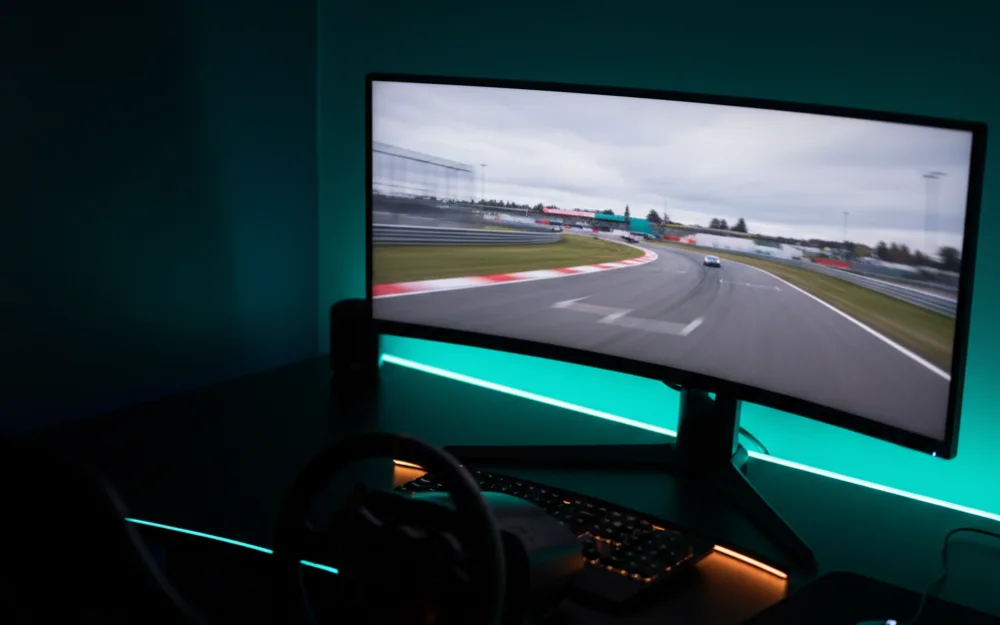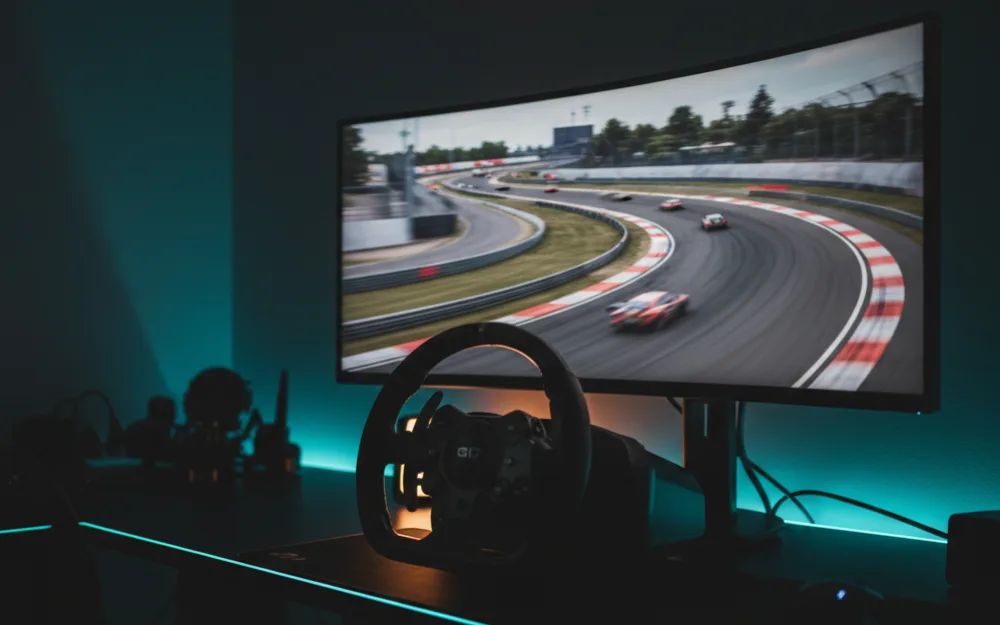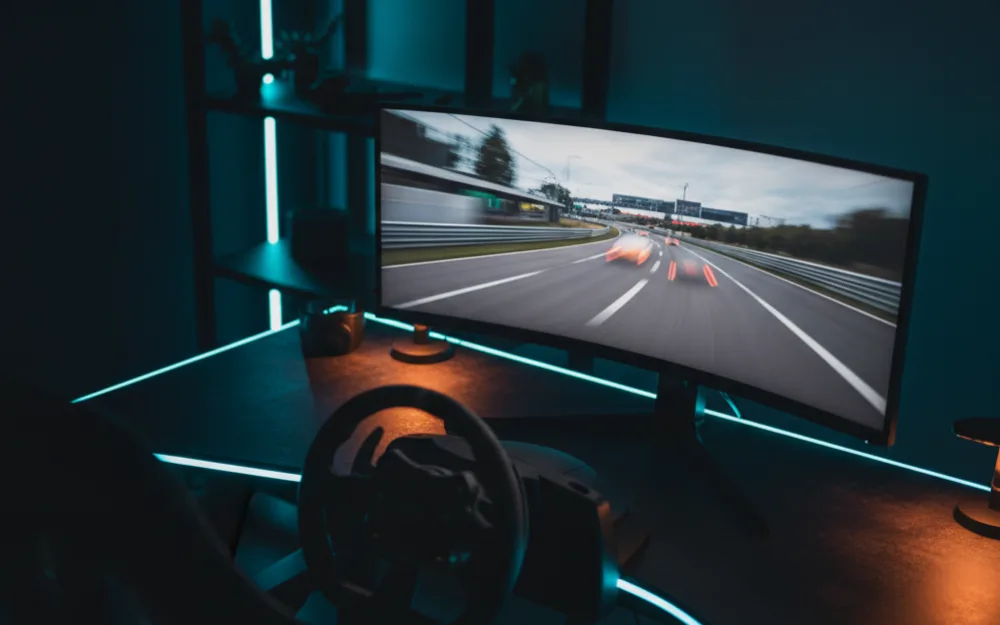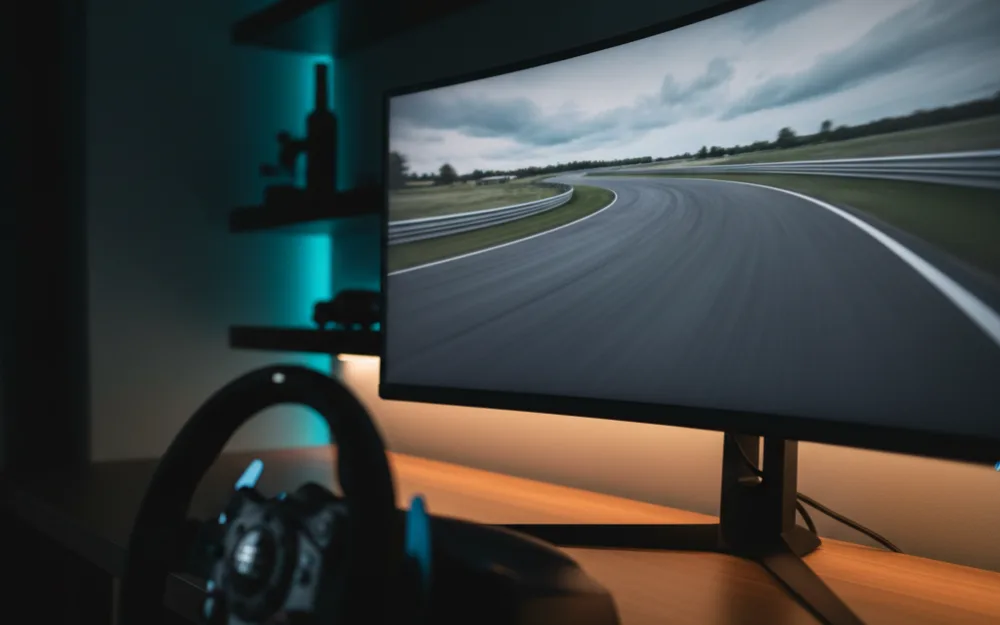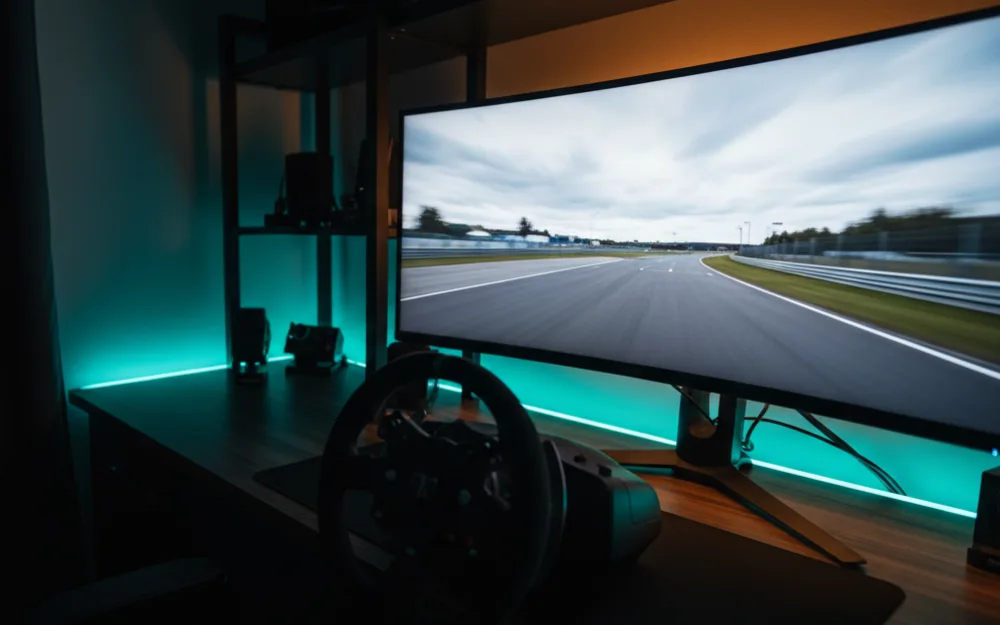

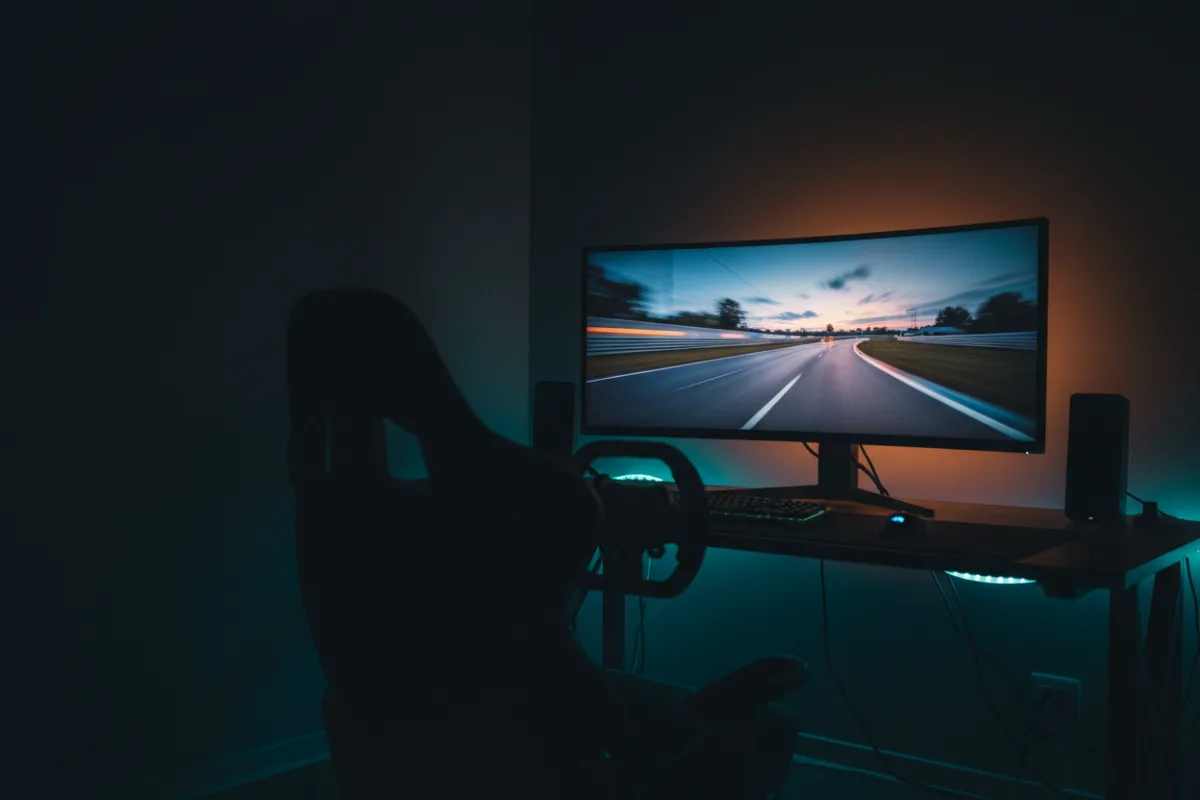

OLED panels earn their place in sim racing for two measurable reasons: near instant pixel response that keeps motion sharp, and per pixel light control that produces true blacks for night races and tunnels. The trade offs are just as real, from peak brightness to the care an OLED needs against image retention. This roundup gathers OLED and QD-OLED monitors that suit a sim rig, grouped by the role each one fills best.
We compared manufacturer specifications with measurements reported by independent review outlets and recurring owner feedback, and you can read how we picked. If display terms are new, start with Getting Started.



How we picked
For racing, we weighed response time and refresh rate first, then contrast and color, because clean fast motion is what an OLED does that other panels struggle to match. We noted the two honest OLED caveats throughout: peak brightness is lower than the brightest LCD panels, so a glare filled room favors a high brightness VA screen, and OLED asks for sensible use of its built in care features to guard against image retention. Resolution workload mattered too, since the largest panels here lean hard on a graphics card.
Compare the picks
| Monitor | Size and ratio | Resolution | Panel | Refresh |
|---|---|---|---|---|
| Alienware AW3425DW | 34 inch, 21:9 | 3440 x 1440 | QD-OLED | 240 Hz |
| Samsung Odyssey G93SC | 49 inch, 32:9 | 5120 x 1440 | QD-OLED | 240 Hz |
| LG 45GX900A-B | 45 inch, 21:9 | WQHD | OLED | 240 Hz |
| LG 45GX950A-B | 45 inch, 21:9 | 5120 x 2160 | OLED | 165 Hz |
| MSI MAG 341CQP | 34 inch, 21:9 | 3440 x 1440 | QD-OLED | 175 Hz |
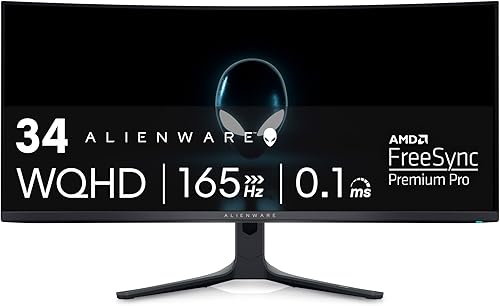
| Alienware AW3423DWF | 34 inch, 21:9 | 3440 x 1440 | QD-OLED | 165 Hz |
| Samsung Odyssey OLED G9 | 49 inch, 32:9 | 5120 x 1440 | QD-OLED | 144 Hz |
Alienware AW3425DW: best overall OLED for sim racing
The AW3425DW is the balanced pick: a 34 inch QD-OLED at 240 Hz with a 0.03 ms rated response and an 1800R curve that suits a single screen rig. Reviewers who compare QD-OLED panels highlight the deep blacks and wide DCI-P3 color, and the size fits a normal desk at a sensible viewing distance. The standard OLED caveats apply, so it rewards a bright control over your room lighting and the use of its care features, but for most racers it is the sweet spot of speed, size, and image quality.
Samsung Odyssey G93SC: best super ultrawide OLED
If you want OLED and maximum width, the 49 inch Odyssey G93SC runs a 32:9 QD-OLED panel at 240 Hz, pairing the widest wrap here with OLED response and blacks. Owners describe it as immersive for racing, with the 1800R curve pulling the edges into view. The downsides are the familiar super ultrawide ones, a heavy GPU load from 5120 x 1440 and a large footprint, plus the OLED brightness and care considerations. For a single panel that fills your vision with OLED quality, it stands alone.
LG 45GX900A-B and 45GX950A-B: the 45 inch immersion picks
LG’s 45 inch OLED pair offers two flavors of large screen immersion. The 45GX900A-B runs a steep 800R curve at 240 Hz for the fastest motion and the deepest wrap, which suits racers who prize speed and immersion. The 45GX950A-B trades some refresh for a 5K2K resolution at 5120 x 2160 and 165 Hz, which keeps text and distant detail sharper on the big panel. Both are demanding on a graphics card, so they belong on a strong rig. Choose the 900A for pace, the 950A for pixel density.
MSI MAG 341CQP and Alienware AW3423DWF: value QD-OLED
These two 34 inch QD-OLED panels bring the OLED look at a lower outlay than the flagship picks. The MSI MAG 341CQP runs 175 Hz with a glossy finish that reviewers note delivers vivid color but more reflection in a lit room, while the Alienware AW3423DWF runs 165 Hz and remains a well regarded QD-OLED for color coverage. Either is a strong entry into OLED racing if the top pick is out of reach or unavailable.
OLED care and image retention in practice
The one caveat that separates OLED from other panels is image retention, and it is worth understanding rather than fearing. OLED pixels create their own light, which is what gives true blacks, but static bright elements shown for long stretches can leave a faint temporary mark. Sim racing is friendlier to OLED than you might expect, since the on track image is constantly moving, but a fixed HUD, a persistent timing panel, or a taskbar left on screen for hours is the kind of static content to be mindful of. Every OLED here ships with care features that shift pixels slightly and run maintenance cycles, and using them as intended keeps retention a non issue for most owners. Treat it as routine housekeeping, not a reason to avoid the technology.
Brightness and the room you race in
OLED trades peak brightness for its contrast, and your room decides how much that matters. In a dim or controlled space, an OLED’s per pixel light control makes night races and shadowed corners look far better than any LCD, because black is genuinely black rather than a dark gray glow. In a bright, sunlit room, the lower full screen brightness of OLED can struggle against glare, and a high brightness VA panel holds up better. Reviewers who compare panels consistently frame this as a room decision, not a quality one. If you race with the curtains open, weigh that honestly before you spend on OLED, because the strongest case for these panels is a controlled lighting environment.
Who should skip OLED
OLED is not the right call for everyone. If you race in a bright, sunlit room, a high brightness VA panel fights glare better than any OLED here. If image retention worries you and you leave static elements like a fixed HUD on screen for long stretches, an LCD panel removes that concern entirely. And if your budget or your graphics card is the limiting factor, a fast VA ultrawide delivers most of the racing benefit for less. OLED rewards a controlled room and a capable rig, not every setup.
QD-OLED and WOLED: two roads to OLED
Not every OLED panel is built the same way, and the two approaches in this roundup have measurable differences. The Alienware, Samsung, and MSI picks here use QD-OLED, which adds a quantum dot layer to boost color volume and saturation, and reviewers who compare panels note its strong, vivid color, though a QD-OLED can show a slightly raised black level in a brightly lit room because ambient light lifts the panel surface. The LG picks use WOLED, which reviewers describe as handling text clarity and bright room contrast a little differently, with its own subpixel layout. Neither is simply better. QD-OLED leans toward color richness, WOLED toward its own balance of clarity, and both deliver the fast response and deep blacks that make OLED worth considering for racing. For most buyers the specific model’s features and price matter more than the panel family, so treat this as context rather than a deciding factor.
Related reading
For value picks that include VA panels, see our best ultrawide monitors for sim racing roundup, and for the full story on the widest OLED here, read our Samsung Odyssey OLED G9 review. If a headset is on your list instead, the best VR headsets for sim racing under $500 is worth a look. Browse more screens in the Displays and Immersion category, and pair your display with a wheel from our best sim racing wheels guide.