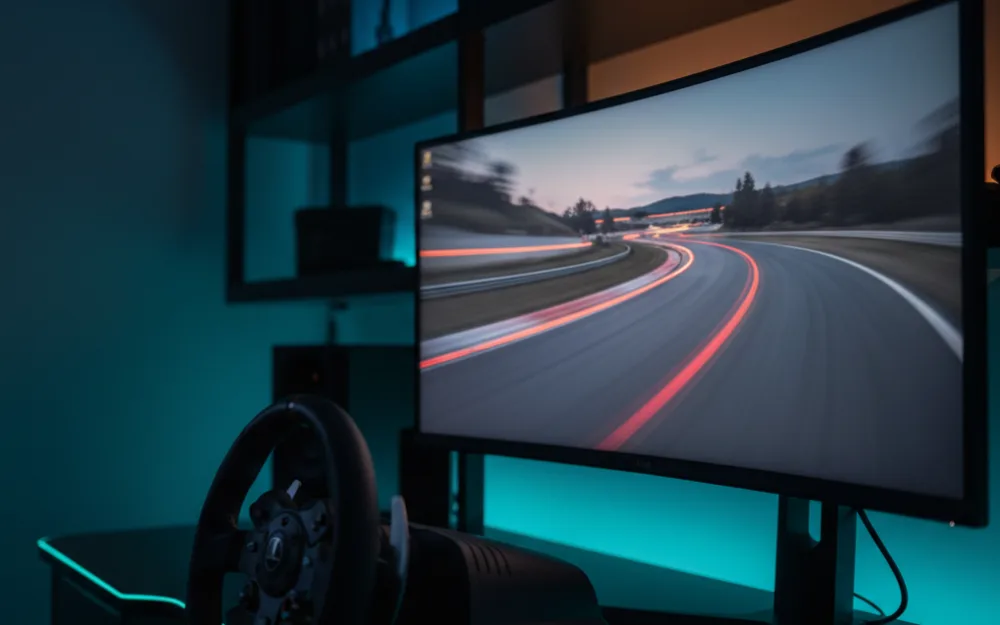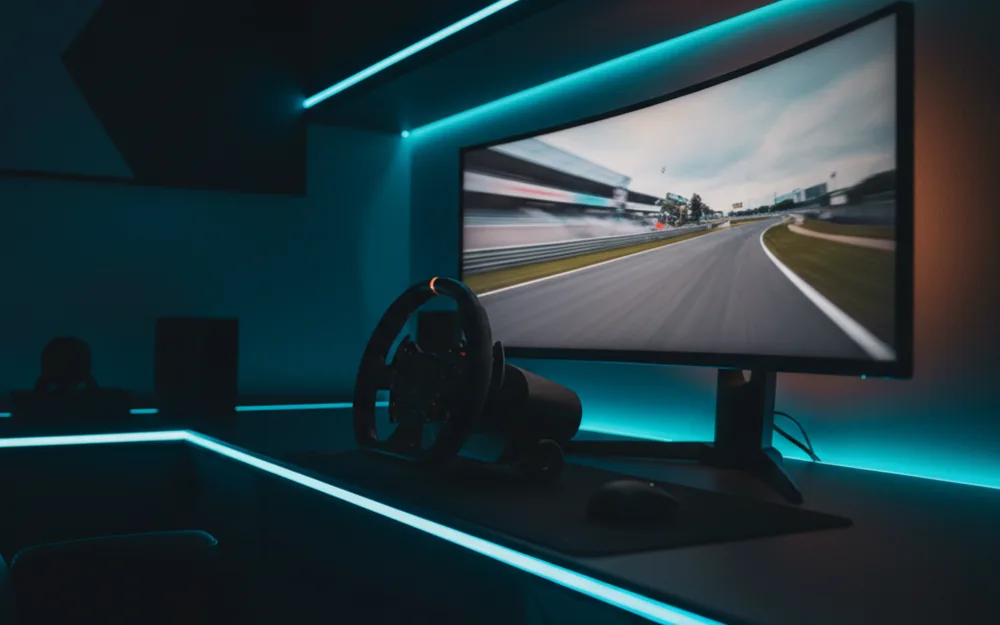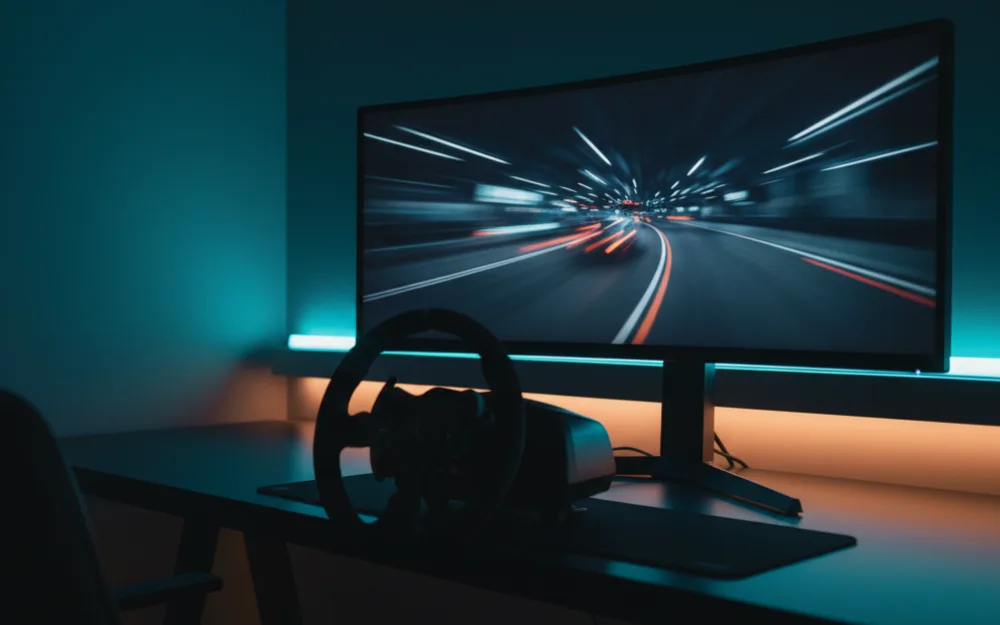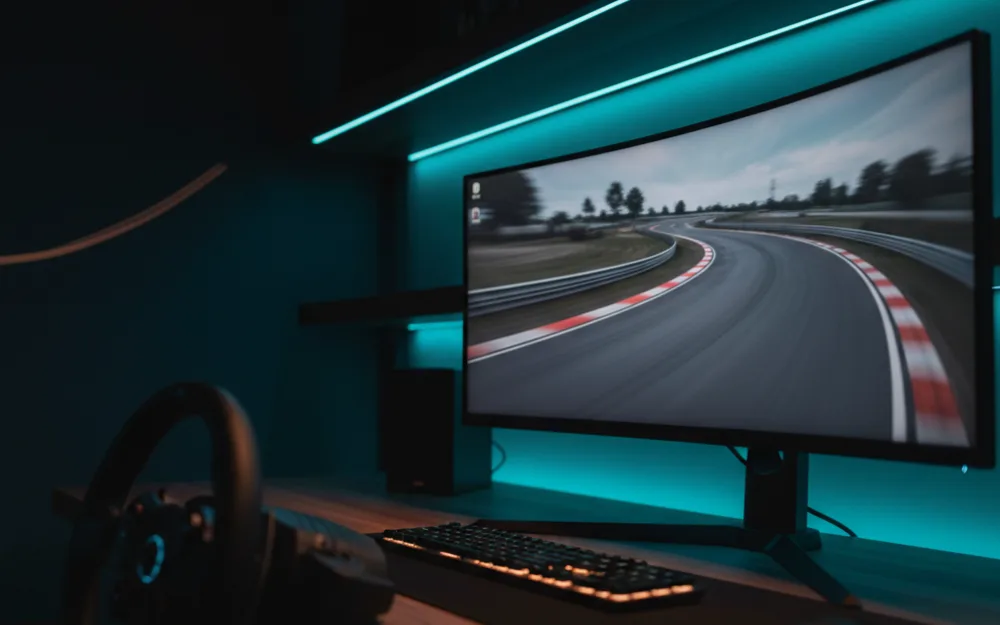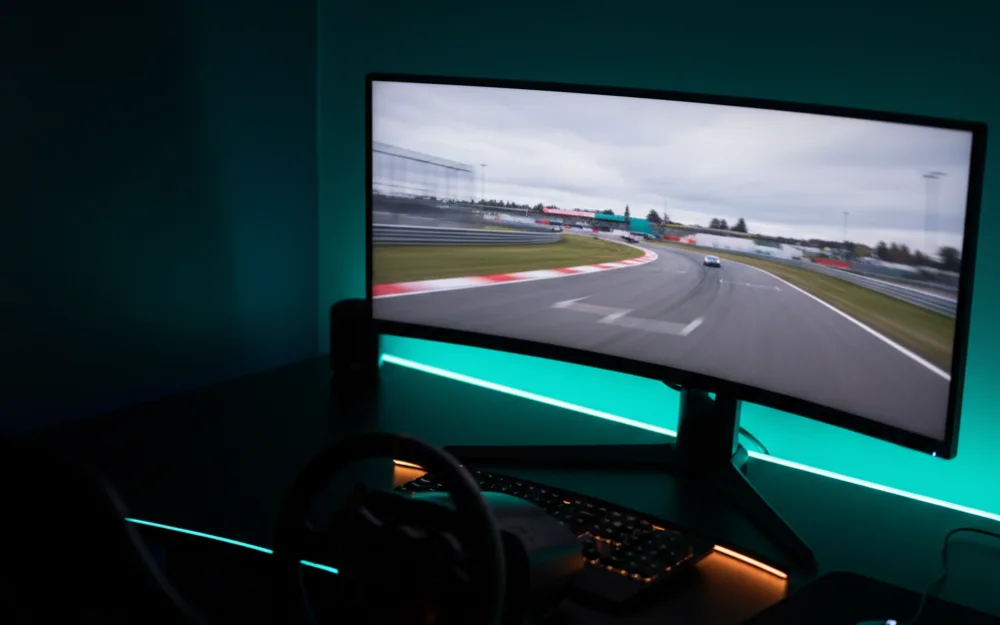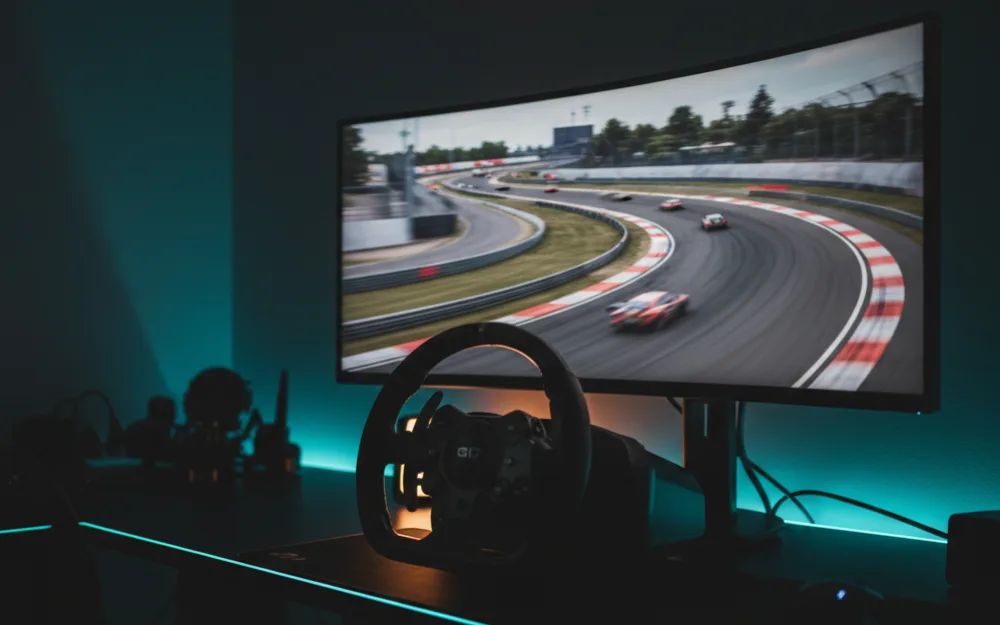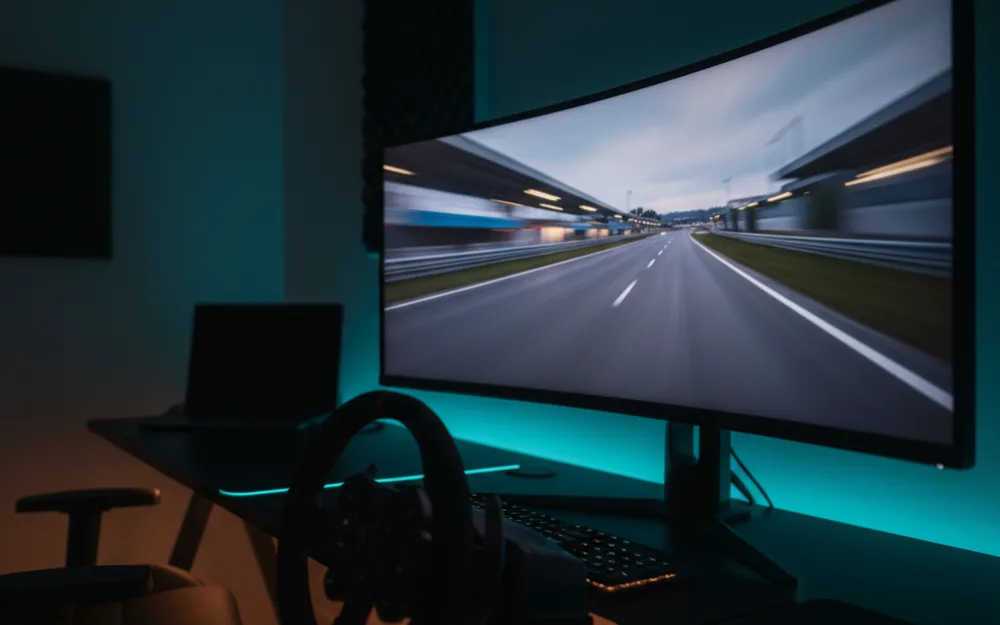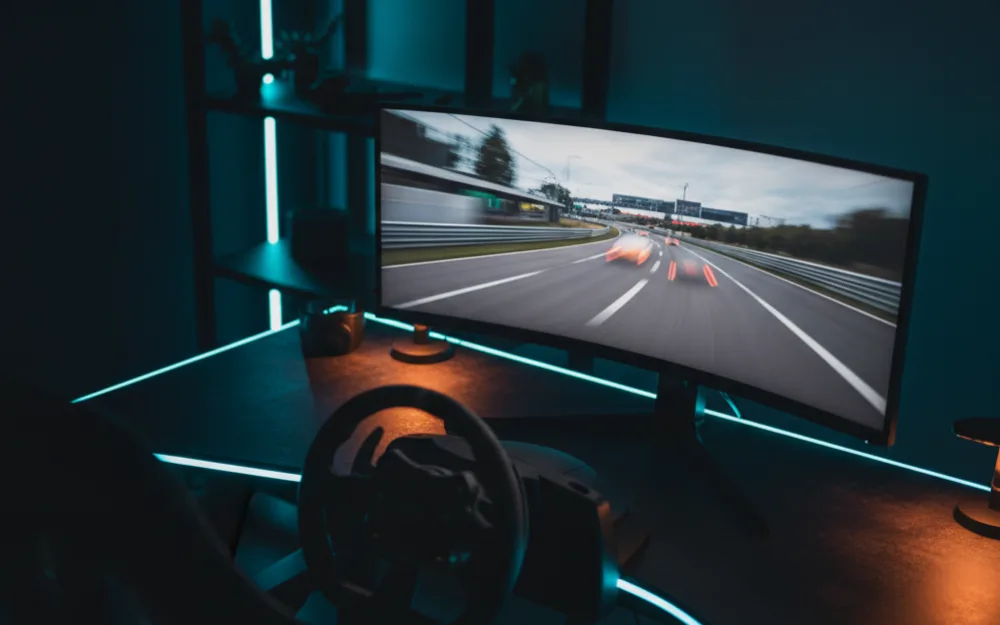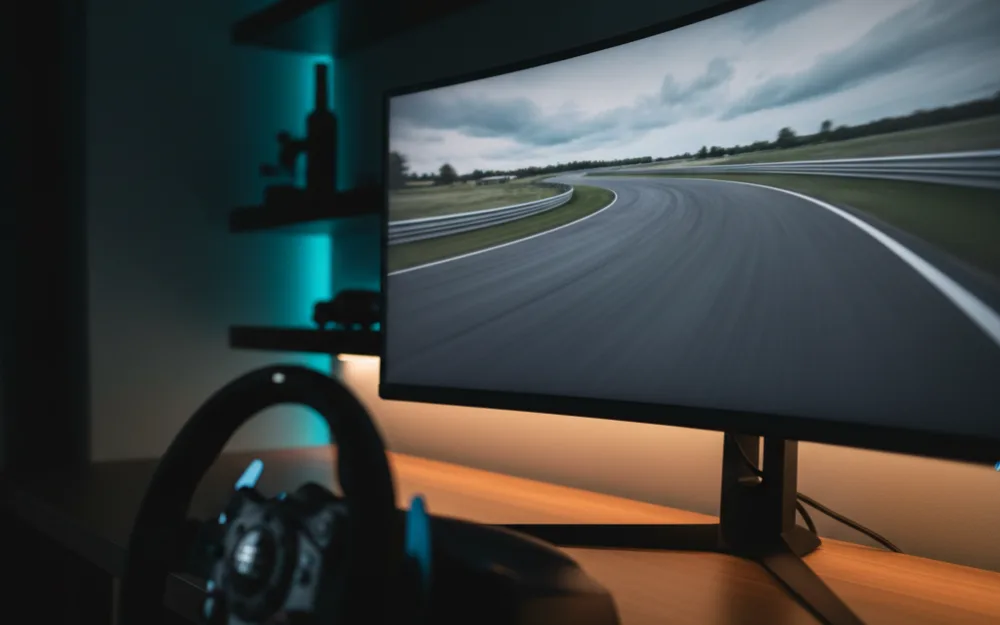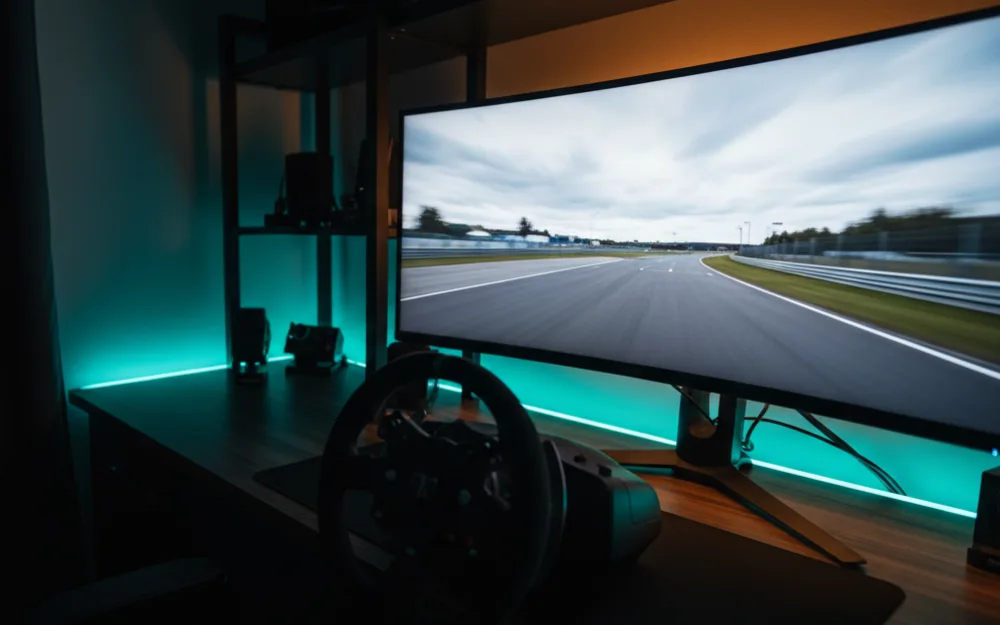

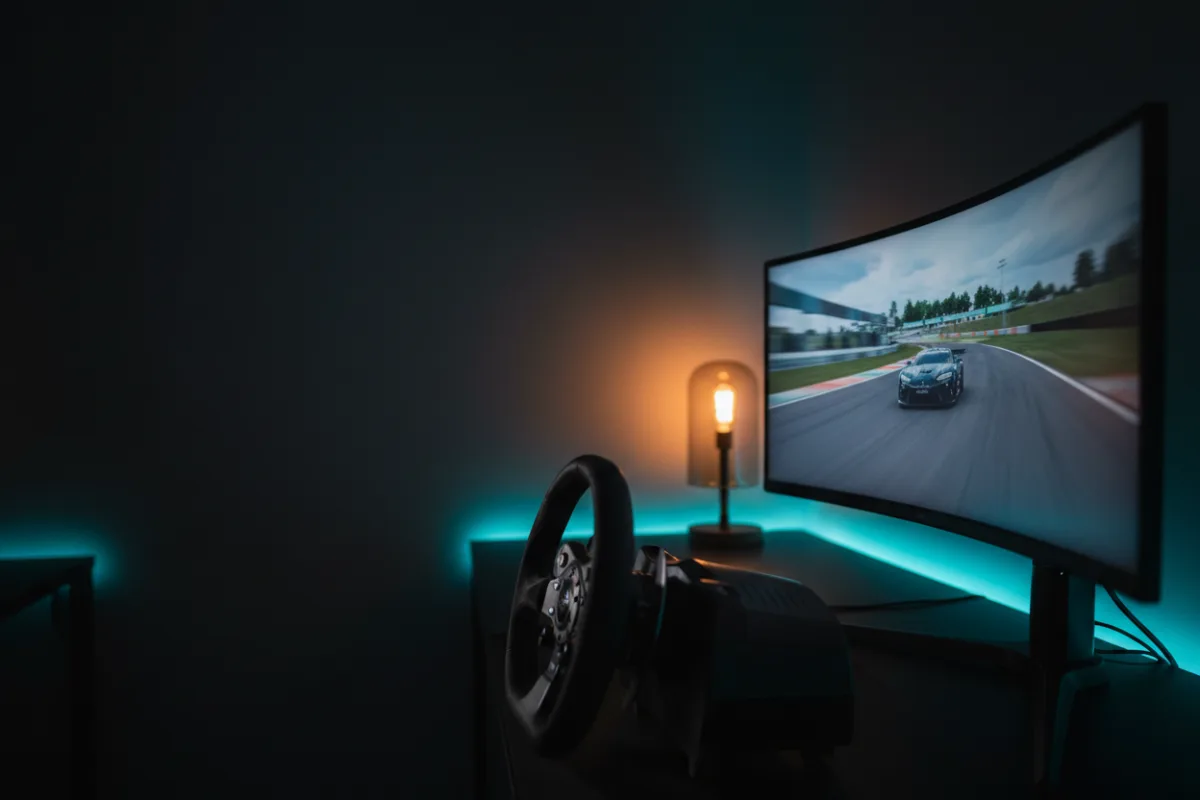

The LG 45GX900A-B, sold as the 45 Ultragear OLED, is a 45 inch, 21:9 curved monitor built around a steep 800R curve. For a single screen sim rig it trades the seams of a triple screen setup for one continuous panel that bends around your peripheral vision, and the question that decides fit is straightforward: do you want maximum screen area on your desk, or do you need the widest field of view a curve this size can give.
We compared manufacturer specifications with measurements reported by independent review outlets and recurring owner feedback, and you can read how we review. If terms like refresh rate and response time are new, start with the Getting Started category.

At a glance
| Spec | 45 Ultragear OLED (45GX900A-B) |
|---|---|
| Size and ratio | 45 inch, 21:9 ultrawide |
| Resolution | WQHD 3440 x 1440 |
| Panel | OLED, 800R curve |
| Refresh rate | 240 Hz |
| Response time | 0.03 ms GtG (per LG) |
| HDR | DisplayHDR True Black 400, HDR10, FreeSync Premium Pro, G-Sync compatible |
What it is and the panel type
This is a 45 inch OLED panel at WQHD resolution, 3440 by 1440, stretched across a 21:9 frame and bent to an 800R curve. LG markets it as delivering more usable screen area than a 49 inch 32:9 panel, since the shape stays taller across the width rather than trading height for extra length, a maker claim worth treating as a starting point rather than settled fact. As an OLED, each pixel lights and dims independently, which gives this class of panel deep black levels and sharp per pixel contrast, a real step up from an LED backlit panel for night racing and dim cockpit scenes.
Motion clarity and refresh for racing
A 240 Hz refresh rate paired with a 0.03 ms rated response time gives this panel plenty of speed for racing. The pixel response is quick enough that reviewers who compare OLED panels describe motion as clean with little of the smearing that slower LCD panels show on fast moving track edges. The caveat is that 240 Hz only helps when your frame rate gets there. At 3440 by 1440, a demanding sim like iRacing or Assetto Corsa Competizione asks real work from your graphics card to sustain triple digit frame rates, so judge this refresh by the GPU you plan to pair with it, not the number on the box. FreeSync Premium Pro and G-Sync compatibility both cover the gap when frame rate dips, smoothing the tearing an uncapped frame rate can introduce mid corner.
Size, curvature, and desk fit
An 800R curve is steep for a screen this wide, which is why LG pushes it as an immersion feature: the tighter the radius, the more of the panel wraps into your side vision at a normal sim racing seating distance. That steep bend is a genuine plus for a driving position, since you sit close and centered rather than working across the screen the way a spreadsheet user would. The trade off shows up in general desktop work, where a tight curve can make straight lines near the top and bottom edges look slightly bowed. At 29.8 pounds with its stand and 45 inches on the diagonal, plan for a sturdy desk or a monitor mount rated for the weight, and confirm the depth this curve adds before you buy.
Connectivity and sync
Inputs cover the common bases for a modern sim rig: two HDMI 2.1 ports, one DisplayPort, and a USB-C input rated for 65 watts of power delivery, enough to run a laptop off a single cable while it charges. HDMI 2.1 bandwidth lets next gen consoles push high resolution, high refresh signals to this panel, so console racers are covered alongside PC. FreeSync Premium Pro and G-Sync compatible certification both apply, so the adaptive sync that keeps racing motion tear free works whether your GPU is AMD or Nvidia.
Pros and cons
- Fast 240 Hz refresh with a 0.03 ms rated response
- Taller 21:9 frame gives more usable vertical screen area than a same class 32:9 panel
- HDMI 2.1 and USB-C with power delivery cover both console and single cable laptop use
- OLED contrast and true blacks help low light cockpit and night race scenes
- The 800R curve is steep enough to distort straight lines during general desktop use
- 240 Hz only pays off with a GPU that can sustain high frame rates at 3440 x 1440
- Brightness is rated for HDR highlights rather than sustained full screen output in a bright room
Who it is for
This panel suits a racer who wants a single screen wrap with fast refresh and response numbers at this size, and who already has a GPU capable of driving 3440 by 1440 at a high frame rate. It also fits anyone who wants OLED contrast for night circuits and dim cockpit lighting without stepping up to a wider 32:9 panel. If your rig leans on console racing as much as PC, the HDMI 2.1 ports make this a fit there too.
Who should skip it
Skip this panel if your graphics card cannot approach its refresh ceiling, since a 240 Hz screen driven at a fraction of that rate pays for headroom you will not use. It is also not the pick if you want the widest possible horizontal field of view rather than screen height, since a 32:9 super ultrawide covers more side to side ground at this diagonal class. If you split time between racing and precise desktop work, the tight 800R curve is worth sitting with first, and OLED buyers worried about static element burn in should weigh that against LG’s panel care tools before deciding.
How it scores
The WSR Score shown above reflects verified buyer ratings gathered and normalized on a consistent scale, not an editorial rubric. You can read what goes into it on How We Review.
Alternatives worth a look
If side to side field of view matters more to you than screen height, our best ultrawide monitors for sim racing roundup weighs the 32:9 alternatives against panels like this one. For the full field, start with best monitors for sim racing, and if you are unsure how curve and width translate into what you see on track, our guide to field of view (FOV) and the companion how to set FOV for sim racing cover the setup.