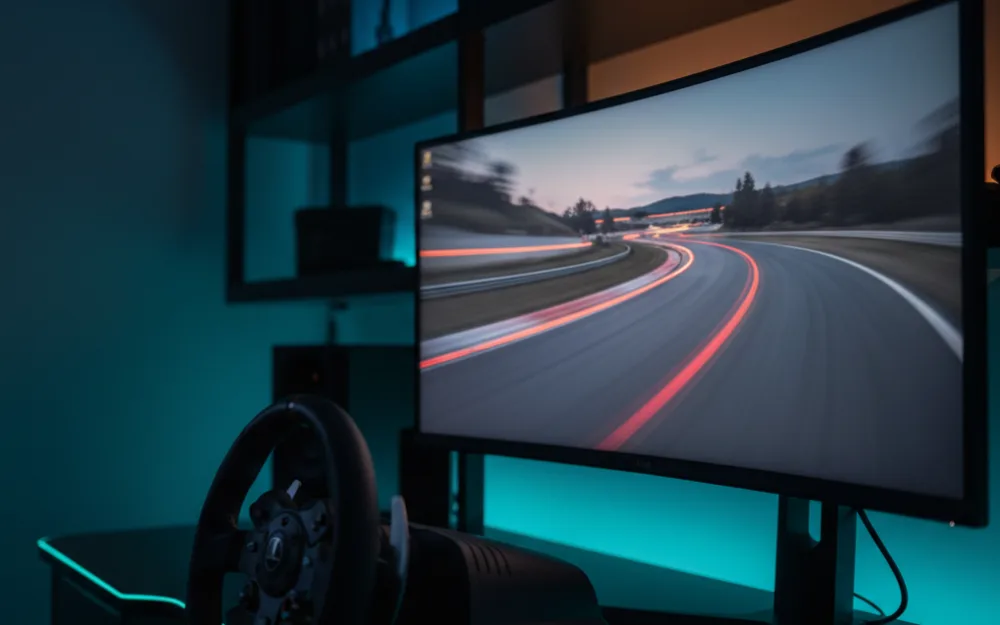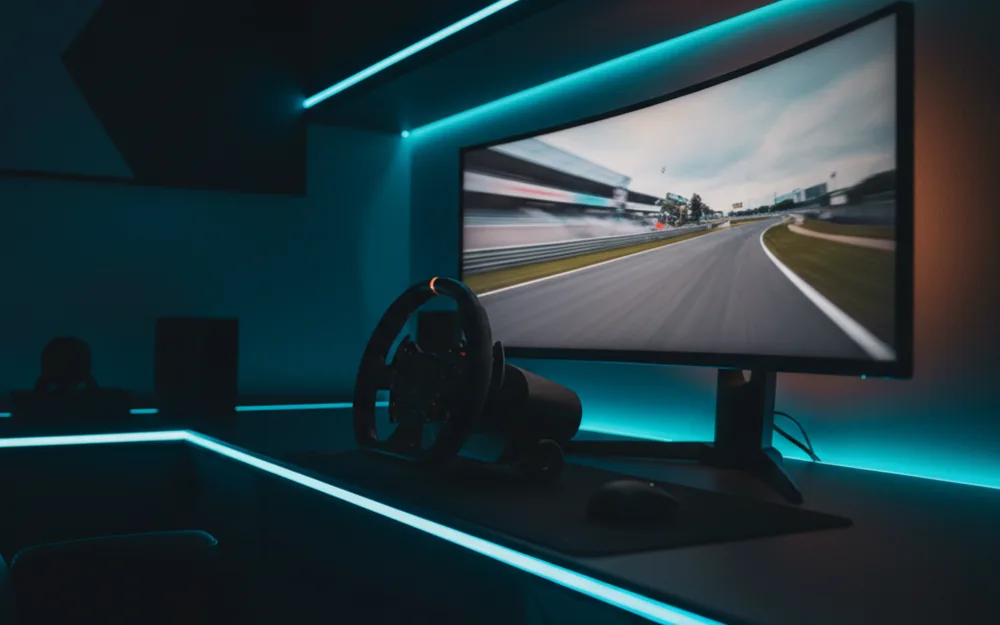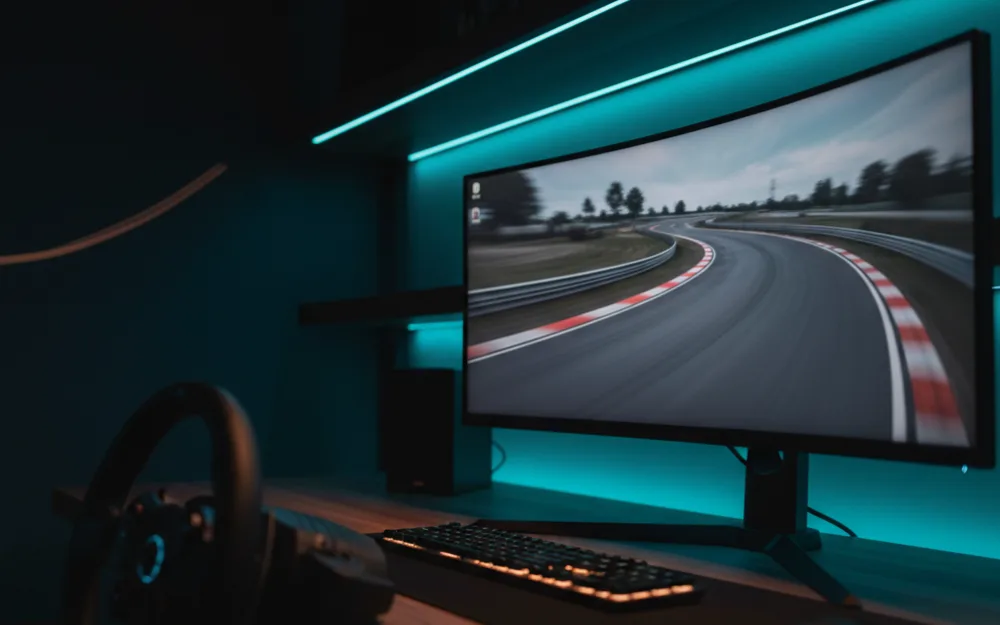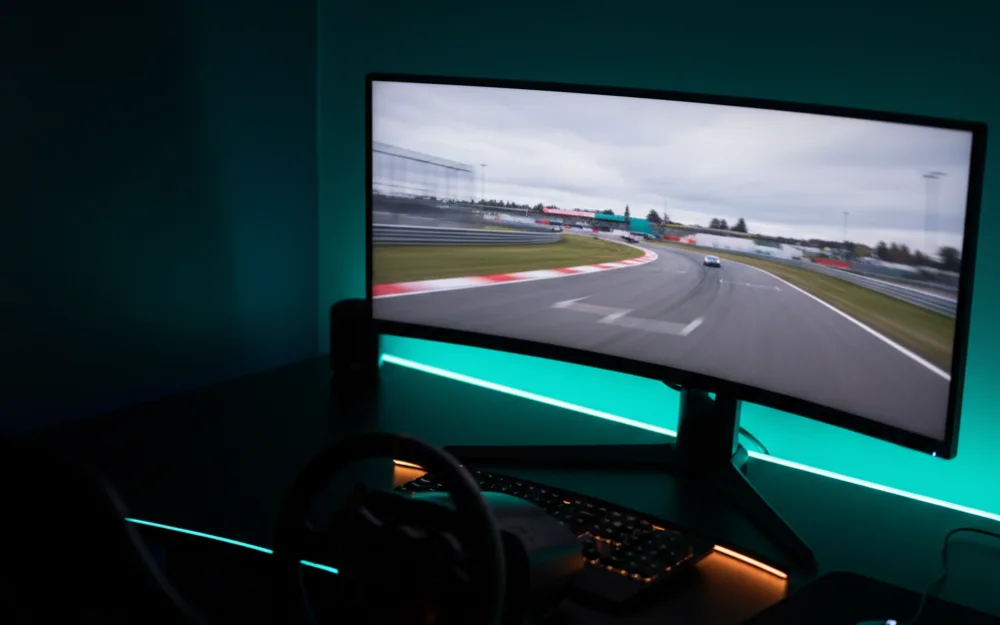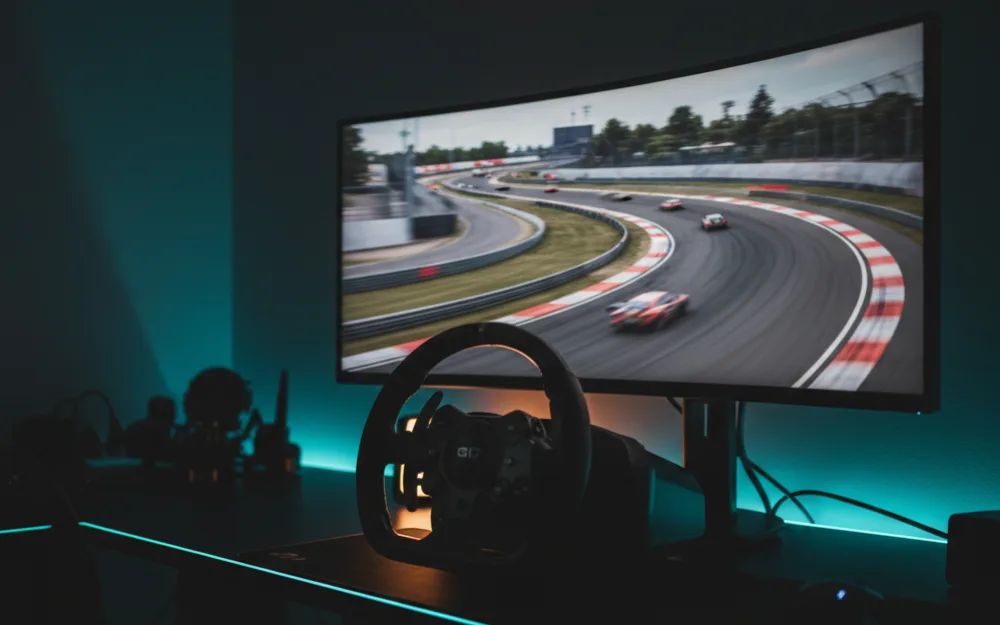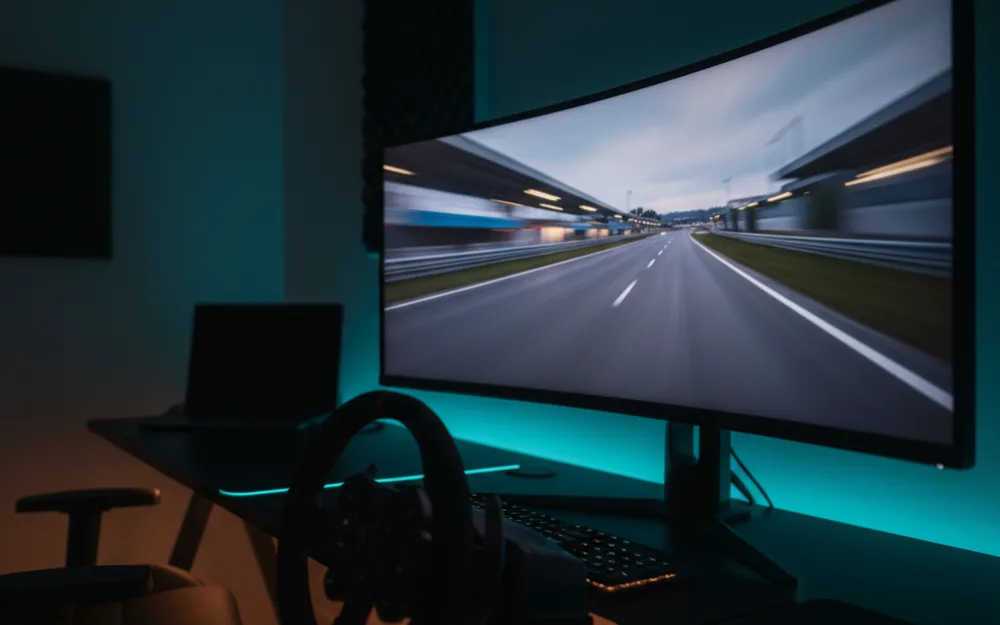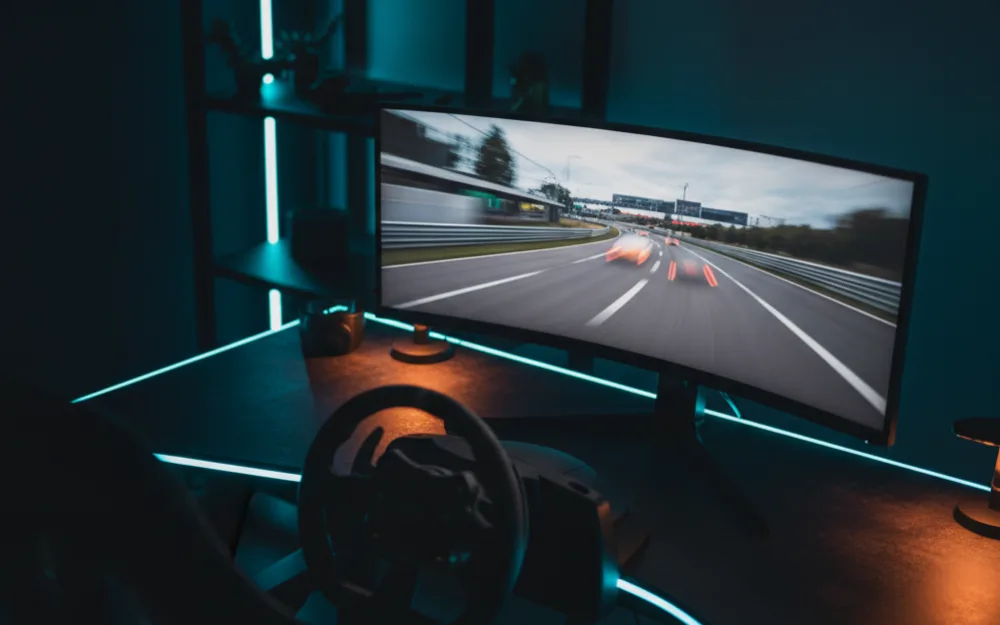


A 49 inch, 32:9 super ultrawide is the closest a single panel gets to wrapping your peripheral vision the way a triple monitor rig does, with one continuous image instead of two bezels splitting the view and none of the extra cabling three screens need. That immersion is the whole appeal, and it comes with a real bill: a panel this wide asks more of your desk depth, your mount, and your graphics card than a 34 inch ultrawide does. This roundup covers the 49 inch panels that suit a sim racing desk, and it is worth saying plainly up front that this roundup compares Samsung’s own tiers, since Samsung covers both the VA and QD-OLED ends of the 49 inch class; ASUS, MSI, and Philips also sell 49 inch QD-OLED panels if you want to shop across brands.
We compared manufacturer specifications against measurements reported by independent review outlets and recurring owner feedback, and you can read how we review. Maker copy sells the width as immersion, while reviewers who cover super ultrawide panels are more specific about what that width costs in frame rate and physical space. Before you commit to this much screen, our guide to field of view (FOV) covers what a wider panel actually changes on track.


How we picked
We limited this list to confirmed 49 inch, 32:9 panels at Dual QHD resolution, 5120 by 1440, rather than the 45 inch, 21:9 ultrawides that reach a similar physical size through a different shape and put pixels in different places. Panel type mattered next, because a VA based LCD and a QD-OLED reach the same width through different technology, with different contrast, response, and brightness behavior. From there we weighed refresh rate, curvature, and image quality, since a super ultrawide’s resolution is already a heavy workload, and a panel that cannot hold its rated refresh under that load is not delivering what the spec sheet promises. Three picks cover the meaningful tiers here honestly, so the list stops at three rather than padding it with near duplicates.
At a glance
| Model | Panel | Resolution | Refresh | Best for |
|---|---|---|---|---|
| Samsung Odyssey OLED G9 (G91SD) | QD-OLED | 5120 x 1440 | Measured pace | OLED contrast at a sensible GPU load |
| Samsung Odyssey G9 (G91F) | VA LCD | 5120 x 1440 | 144 Hz | Value and brightness in a lit room |
| Samsung Odyssey G9 (G93SC) | QD-OLED | 5120 x 1440 | High refresh | The fastest OLED wrap for a strong rig |
Samsung Odyssey OLED G9 (G91SD): the balanced OLED pick
The G91SD is the QD-OLED entry in Samsung’s 49 inch lineup, a self lit panel at 5120 by 1440 that pairs the full 32:9 width with per pixel light control. For a racer who wants genuine OLED contrast at this size without chasing the highest possible refresh number, this is the balanced choice, and owners describe the jump from a VA panel to QD-OLED at 49 inches as most obvious in shadow detail during night races, where per pixel dimming produces real black rather than a VA panel’s dark gray glow. Our Samsung Odyssey OLED G9 review covers the full picture. The measured caveats are that its refresh ceiling is set for a manageable GPU load rather than the highest in the family, and that verified buyer feedback on this specific listing is thinner than on the longer established VA model, so treat that as a smaller sample.
Samsung Odyssey G9 (G91F): the value 49 inch pick
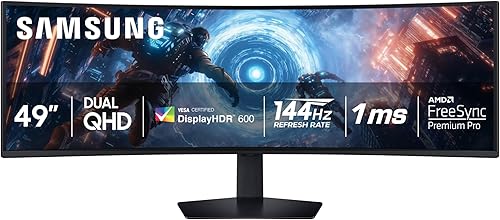
The G91F is the VA based LCD in the group, a 49 inch, 32:9 panel at 5120 by 1440 running 144 Hz. It is the pick for a driver who wants the widest single screen field of view without paying an OLED premium, and it holds a real advantage in one measurable area: a VA LCD can push stronger full screen brightness than an OLED, which matters in a room you cannot fully darken. Our Samsung Odyssey G9 review has the details. The tradeoff is response time. VA trails OLED for fast, dark transitions, so quick motion at the edge of visibility shows a touch more smear, and the black level is a dark gray rather than the true black an emissive panel delivers. For a lit room and a tighter budget, that is a fair exchange.
Samsung Odyssey G9 (G93SC): the premium, fastest wrap
The G93SC sits at the top of the range, a 49 inch QD-OLED at 5120 by 1440, and reviewers who compare Samsung’s OLED pair describe it as the faster of the two, with a 240 Hz refresh rate that puts its motion clarity at the top of the 49 inch class. For a buyer whose graphics card can genuinely sustain high frame rates across 5120 horizontal pixels, this is the pick that rewards that horsepower. The caveat is exactly that demand: pushing a high refresh across a Dual QHD width is the heaviest GPU workload in this roundup, well beyond what the 144 Hz VA panel asks, so it makes sense only behind a strong rig. The sheer footprint also needs real desk depth and a sturdy mount before it fits a sim setup.
49 inch or triple monitors?
The real decision is not which 49 inch panel, but whether a 49 inch panel is the right shape at all. A single 32:9 screen gives you a continuous image, one cable, and one adaptive sync target, which keeps the setup simple and the frame pacing consistent. A triple monitor rig goes wider still and can angle the side panels toward you for a more correct sense of speed in your peripheral vision, but it costs three panels, a sturdy stand, the bezels between screens, and a heavier configuration load. Choose the 49 inch panel if you value a clean single screen, a tidy desk, and simple setup. Choose triples if you want the widest possible angled wrap and are willing to manage three displays and the mount they need. Our best ultrawide monitors roundup covers the narrower single screen options if 49 inches is more desk than you have.
Who should buy which
| Pick this if | Look elsewhere if |
|---|---|
| You want OLED contrast at 49 inches at a sensible GPU load (G91SD) | You have a modest graphics card that cannot drive this width |
| You want the widest screen at the lowest price, in a lit room (G91F) | You want true black and the cleanest fast motion |
| You have a strong rig and want the fastest OLED wrap (G93SC) | Your desk is too shallow to seat a 49 inch panel at a sensible distance |
None of these three make sense for a racer with a modest GPU or a shallow desk, since 49 inches at any refresh needs both the horsepower and the physical space. A 34 inch ultrawide is the more forgiving choice in either case.
How we score
The WSR Score shown in the product cards above reflects verified buyer ratings gathered and normalized on a consistent scale, not an editorial rubric. You can read what goes into it on How We Review.
More displays to compare
If a 49 inch footprint is too much desk, our best ultrawide monitors for sim racing roundup covers the 34 and 45 inch alternatives. For the specific OLED families, see our best QD-OLED monitors and best OLED ultrawide monitors guides, and for immersion below OLED prices start with our best curved monitors for sim racing. The monitors category has the rest of our display coverage.